- Wipe A Tear, Kampala
- Food projects
- Yo Viajo
- Poder Joven, Jardín de Amor and Straatkinderen Medellín
- Music lessons in the children’s home St. Mary Kevin Orphanage Motherhood
- Music lessons in the Hearts-Vision Home
- Tulip Garden, Andhra Pradesh
- Music Buddies
- Music lessons at primary schools in Amsterdam-East
- Short projects & workshops
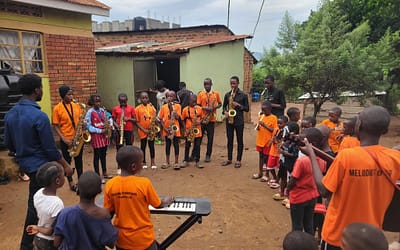
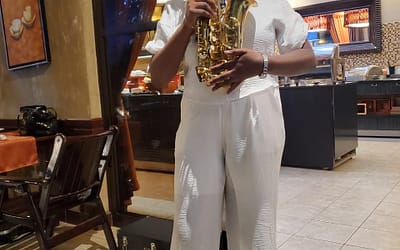
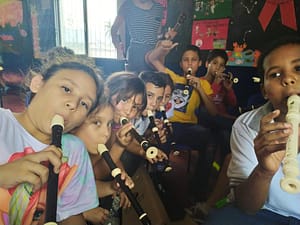
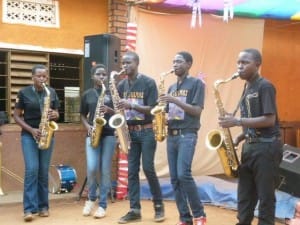
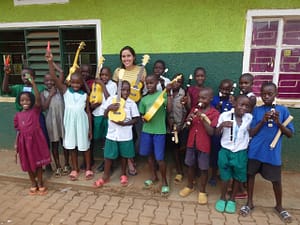
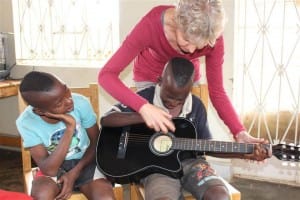
In recent years, Tony Sentammu and Claire Nakibuule (both former students of Monique, who grew up in SMK and were part of the Five Stars) have been giving intensive music lessons at Wipe a Tear. The little ones received lessons on recorder, melodica (blow piano) and ukulele; the older children on guitar and saxophone.
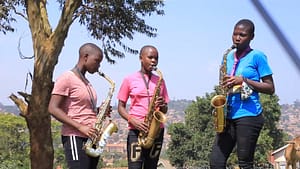
With heavy hearts we had to decide to terminate the saxophone lessons of Muziek voor Kinderen at the Wipe a Tear location as of September 2022. We reached this decision after a long series of events that made it clear to us that a fruitful collaboration between the saxophone teachers and the management of Wipe a Tear around the lessons was no longer possible. As can be read in the report by Samira and Josien, our saxophone teachers no longer saw a future for the saxophone lessons at this location, partly because they felt the management did not cooperate with activities related to the lessons. The management did not give priority to or recognition of the importance of this instrument and the lessons. Because they felt that their lessons and creativity were being obstructed, Tony and Claire decided to stop teaching at Wipe a Tear.
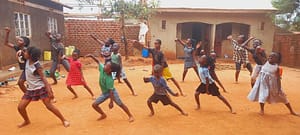
We all find this very sad and regret it for both the teachers and the children; it was such a joy for the students to have lessons, and the children learned an incredible amount. Fortunately, the dance and drum lessons at Wipe a Tear are still continuing. We hope that the kids at this location can still enjoy our educational offer in this way.
When I joined Rabobank in 2010, I was introduced to the history of the bank. Rabobank originated from a merger of Raiffeisen Bank and the Boerenleenbank. These two cooperative institutions stem from the efforts of mayor Raiffeisen from the village of Flammersfeld.
Friedrich Wilhelm Raiffeisen was a driven man. A man with a vision and a strong sense of justice. A man who strongly believed in self-reliance and understood the power of cooperation. He watched with dismay as poor farmers in his region had to borrow money from usurers and were thus stuck in a hopeless situation of deep poverty and underdevelopment. This led Raiffeisen to set up a cooperative of farmers who had surplus funds and were willing to use these to finance those in need of credit. The first Raiffeisen cooperative (Boerenleenbank) was thus born. This eventually led to a worldwide network of various cooperative forms: from banks to agricultural companies all over the world and retail chains in our own streets. The Coöp is still a well-known example of this.
At the Muziek voor Kinderen Foundation, we work hard to offer a future perspective for the students of Wipe a Tear in Kampala and Khule Africa in Ggaba. By learning to make music, work together and have fun, their chances of building an independent life increase, and in doing so we promote the development and self-reliance of the children.
The coronavirus pandemic made it even clearer how vulnerable people in a country like Uganda are. As a result of the Covid measures, an acute food crisis arose. Transport came to a halt, prices rose due to enormous inflation and, because churches remained empty, no money came in to the orphanages to buy enough food. And how can you give music lessons and make music on an empty stomach?
For this reason, the Muziek voor Kinderen Foundation started a campaign to alleviate part of the need. By organising actions, we raised money specifically intended for feeding the orphans. In total, during the pandemic, € 6,000 was raised and donated for food aid. But how long do you continue doing this? And is giving money for food the best solution? Personally, I don’t think so. I do think it was necessary, but I believe it is better to follow Raiffeisen’s principles and ensure that the orphanages become self-sufficient in a country that already faces many challenges and is now more vulnerable than ever. That is when we came up with the idea to see whether it would be possible to buy or lease a piece of land and grow food on it ourselves.
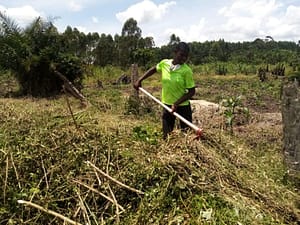
At first we looked into buying a plot of land. However, this turned out to be an impossible task and the risks were simply too great. The purchase costs are high and controlling the project is complicated if you do not have local people on the ground. In addition, it was not entirely clear how experienced people were in agriculture, because farming requires a great deal of knowledge and experience. Eventually, Wipe a Tear itself came up with a piece of land that could be leased. They also convinced us that they were capable of growing their own food. On that basis we jointly decided to give this a chance and, for a period of two years, pay the lease and supply Wipe a Tear with seeds to see whether it would be possible to grow food on 8,000 m² of land. That is about 1.3 football fields.
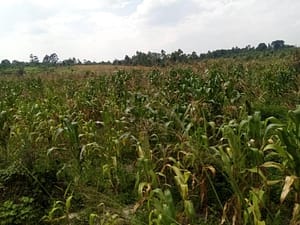
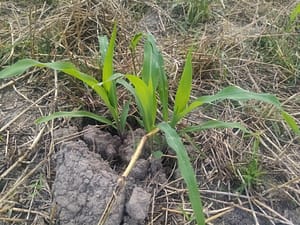
The first harvest is now on its way and consists entirely of maize. Maize is not a very complex crop and grows well in the tropical climate of Uganda. There is knowledge available in the area, but the question remains how successful this first harvest will ultimately be. That is why we decided to provide support for at least two years, so they can gain experience. We regularly receive photos of the field filled with maize and we expect that we will soon see the first results: children eating maize pancakes made from their own self-grown food. And all of that thanks to the ideas of Friedrich Wilhelm Raiffeisen.
The costs for the lease and seeds are less than € 1,000 per year. If we can thereby reduce part of the food shortage and increase self-reliance, then that is already a wonderful result in my view.
In the photos below you can see the first results.






The video is here!
Yo Viajo – report of a journey towards musical cooperation between children worldwide
In the summer of 2020, the MvK Foundation decided to collaborate with Proyecto Manglar, an initiative by Colombian music teacher Dario Eraso and Derk Norde.
Dario has been active as a music teacher in Medellín for a long time; he teaches children who grow up in vulnerable circumstances and/or poverty. During her trip to Colombia at the beginning of 2020, Samira worked closely with him.
The objectives of Proyecto Manglar match seamlessly with those of the Muziek voor Kinderen Foundation. Thanks to the support of Muziek voor Kinderen, Dario can expand his activities in Colombia, reach more children and teach more often.
At the same time, the idea arose to extend the cooperation into the musical sphere!
Music is a binding force – for children who make music, it is great fun to get in touch with peers from other countries who also play music. And the connection becomes even stronger when you work together on the same project.
Our goal: a piece of music that would be studied and recorded by children in Colombia, the Netherlands and Uganda, with the recordings then edited into a joint intercultural and international music video. That is how “Yo Viajo” was created. In the timeline below you can read how this project came about and which obstacles (because of Corona) we had to deal with.
YO VIAJO – TIMELINE
September 2020
Dario sends his first version of the piece Yo Viajo to Petra Griffioen (MvK board member). She leads a school orchestra at the Hyperion Lyceum (Samira’s former school), with which she wants to rehearse this piece.
Yo Viajo is based on the Porro Chocoano rhythm, which has African roots. Naturally, Samira has the idea to also involve the Ugandan saxophone students in this project.
October 2020
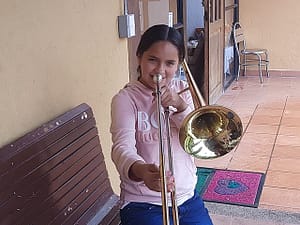
Colombia: Dario starts rehearsing his piece at the home Ángeles de Amor. Due to Corona, he is not yet allowed inside the home. The children sit on the balcony and he teaches from the garden.
Netherlands: At the Hyperion Lyceum the students of the school orchestra start rehearsing the piece. Rehearsals are still in small groups because of Corona, and regularly students are missing because they are in quarantine. During rehearsals we also record short videos in which the students introduce themselves in Spanish and send them to Colombia. This way we already get to know each other a little. The students from Ángeles de Amor send cheerful videos back.
Uganda: At the Wipe a Tear home, the saxophone students also start rehearsing the piece, under the guidance of music teachers Tony and Claire. When we edit the practice footage from the three countries one after the other, you immediately get an impression of where this is headed!
November 2020
Dario and Derk make an instructional video in which they explain the “Porro Chocoano” rhythm. Petra uses this video again in rehearsals with her orchestra. https://www.youtube.com/watch?v=hwISFh-avss
In Uganda they are also practising hard, although that is sometimes hampered by the lack of food. Muziek voor Kinderen makes an effort to raise money for food as well.
December 2020
Filmmaker Hermen de Waal offers to film the students of the Hyperion Orchestra. We schedule a recording day, but it cannot go ahead because of the sudden school closure in mid-December. Fortunately, audio recordings had been made a week earlier. During the Christmas holidays, Petra brings her recording device to individual orchestra members to make additional recordings.
In Uganda they are busy organising a live-stream benefit concert, and rehearsals for Yo Viajo are temporarily on hold.
January 2021
In Colombia, Dario lines up the audio recordings from the Netherlands and Colombia.
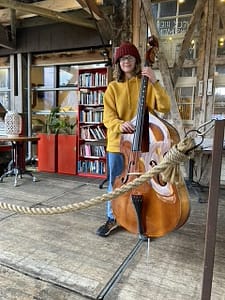
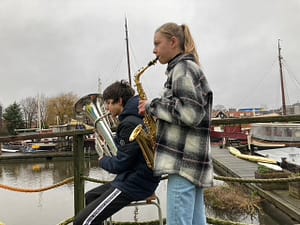
Video footage is also recorded outdoors, because we also want to show where the children live. In the Netherlands, measures are currently strict; we are not allowed to meet with the entire orchestra. That is why we film the students individually or in pairs.
February 2021
For Tony and Claire in Uganda, it is a challenge to make good recordings; Samira and Petra consult with them via WhatsApp: How do you get the right equipment, audio interface, microphones, camera, and what is a good place to record?
March 2021
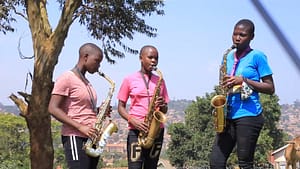
They succeed: the recordings in Uganda are made. Sending the footage is still quite a task when you do not have enough data!
Now it comes down to the details: editing in Colombia, translation. The piece Yo Viajo is based on a poem by Ana Sofia Quinchia.
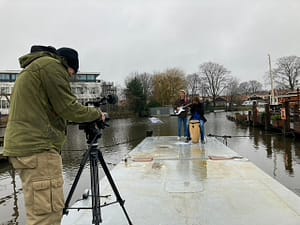
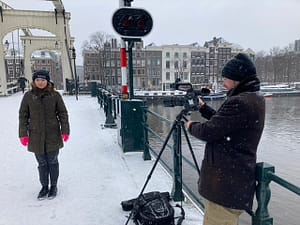
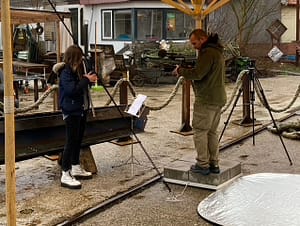
April 2021
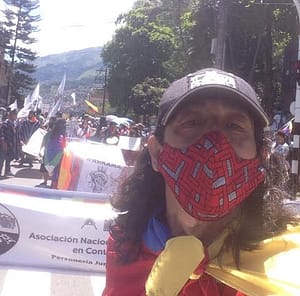
The musical part of the film is finished! We would like the film to start with children from all three countries telling something about themselves. That is our message: all children, wherever they live, can enjoy music and making music together. We enthusiastically start working on the interviews. But again, it turns out to be quite a job to make, share, combine, translate and edit that material. Communication goes via Google Translate and, every now and then, there is a real Babylonian confusion of tongues.
May 2021
June 2021
HOORAY, our film is completely finished! From now on we will share it with anyone who wants to see it!
 From July 2011 until 2016, a large project ran in St. Mary Kevin in Kajjansi, a village not too far from the capital Kampala. In the home, much attention is paid to creative expression. Muziek voor Kinderen supported the music and dance activities (brass band, pop band and traditional dance group) with funding for lessons by local teachers, instruments and volunteers. In May 2014 the Five Stars, a talented music and dance group from SMK, visited Amsterdam for an exchange as part of the Muziekmaatjes Project. They performed together with their Dutch Music Buddies. The project ended in 2016.
  In 2019, the project was briefly revived with a few months of music lessons. Tony Sentamu, Brian Nsubuga and Samira Kaya gave lessons mainly in ukulele, recorder and kazoo and in lots of singing with the classes. They occasionally also took over the brass band lessons. Unfortunately, the orphanage went bankrupt that summer, which meant that the music project also no longer had a future.
 This project started in 2014. Monique Udo visited the home where 16 former street children live and made music with them for a week. Since then, a number of children received weekly keyboard/guitar lessons from a local teacher. In January 2015, Marco de Jong, student at the Utrecht Conservatoire, started his graduation internship at Hearts Vision. He guided the children in writing their own rap songs and the result was recorded on CD. The project ended in 2016.
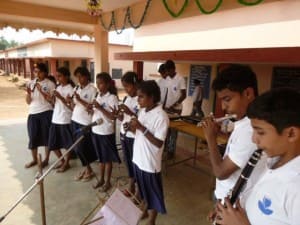 Tulip Garden is a children’s home built by “Stichting Derde Wereld Hulp” (SDWH) from Amstelveen. About 65 children live there. The music project started in 2009 with an intensive four-month programme by Monique Udo. Since then, she worked each year for several weeks with the “Tulip Garden Music Group”, and during that period the group gave concerts at schools, homes, hospitals, etc. In addition, a group of about 8 children received weekly keyboard lessons from a local teacher. Over time, one of the participants in this project even started on the path of becoming a professional musician! The project ended in 2016.
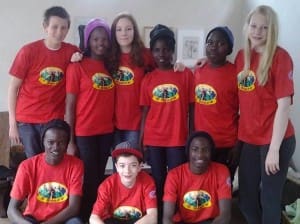 Since May 2012, a number of Dutch children have been “music buddies” with the young musicians of St. Mary Kevin. Through letters, videos and Skype meetings, they get to know each other’s lives and share what they are working on musically. Twice a year, MvK organises a “Muziekmaatjes Concert”, a benefit concert where money is raised for the projects. At the moment this is on hold, but we are working hard to get it going again.